Why Your Tinnitus Gets Worse at Night
5/16/20263 min read
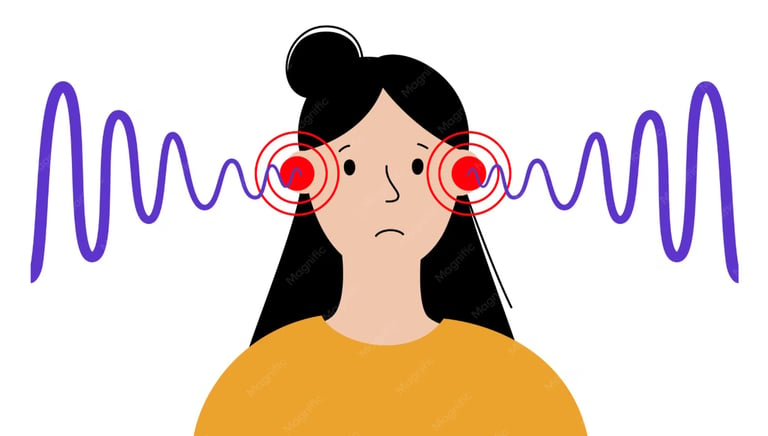
You lie down exhausted and the ringing gets louder.
The house is quiet. Your thoughts finally slow down. Then that sound takes over everything again. You start wondering if this is just your life now.
What makes tinnitus so brutal at night is the contrast. During the day, your brain has distractions. Traffic. Conversations. Screens. Movement. At night, the nervous system has nothing else to grab onto. So the ringing moves front and center.
That part matters more than most people realize.
You are not imagining the increase in volume. Your brain actually changes how it processes sound when the environment becomes silent. The auditory system starts searching for input. When it cannot find enough external sound, it amplifies internal signals instead. That ringing suddenly feels impossible to escape.
Stress makes it worse too.
Not vague emotional stress. Physical nervous system stress.
If your body stays in a constant alert state, your brain becomes more sensitive to sensory input. That includes tinnitus. This is why some people notice their ringing spikes after poor sleep, jaw tension, neck strain, caffeine overload, or long periods of anxiety. The sound itself may not have changed much. Your brain’s response to it did.
That is also why “just ignore it” never works.
A man I once spoke with kept a fan running beside his bed every night for six years. He slept with podcasts playing under his pillow. He even avoided silence during the day because the ringing terrified him. The moment everything got quiet, panic hit his chest immediately.
That reaction is more common than people admit.
Sound masking can help temporarily. White noise machines, soft rain sounds, and low background audio sometimes reduce the contrast enough for the brain to settle. But many people notice the ringing returns the second the masking stops. That can feel defeating.
The deeper issue often sits underneath the sound itself.
Your auditory system connects closely with the jaw, neck muscles, circulation, inflammation levels, and stress response. When those systems stay irritated, tinnitus can become harder for the brain to filter out. That is why two people with similar hearing damage can experience tinnitus completely differently.
Most people spend years fighting the noise itself while ignoring the overstimulated brain and body systems feeding it.
That shift changes how you see the problem.
Sometimes the goal is not forcing silence overnight. Sometimes the first real win is teaching the brain to stop treating the sound like a threat. Once that threat response lowers, the volume often becomes less intrusive naturally. You stop tracking it every second. Sleep starts returning in small pieces.
There are practical things worth trying tonight.
Lower the silence in the room gently instead of blasting noise directly into your ears. Keep volume low. Stretch your jaw and neck before bed if you clench during stress. Avoid scrolling in darkness for an hour before sleep. Your nervous system needs a chance to downshift before your head hits the pillow.
Pay attention to what spikes the ringing the next morning too. Alcohol, exhaustion, sinus pressure, and even dehydration affect some people more than they realize.
And if your tinnitus suddenly changes, pulses with your heartbeat, or comes with hearing loss or dizziness, do not ignore that. Certain forms of tinnitus need proper medical evaluation early.
I know you are probably skeptical at this point. Most people with tinnitus have already tried ten different things before reading another article at 2 a.m. After dealing with this myself, I put together a short free video showing the exact connection between tinnitus, nervous system overload, and why nighttime ringing feels so much louder for certain people.
I also explain why untreated tinnitus sometimes progresses alongside hearing changes when the underlying trigger keeps getting missed. Understanding that earlier can matter more than people think.
[→ Watch The Free Video Here]
Healova
Simple health and wellness content designed to be easy, calming, and beginner-friendly.
Quick links
© 2025. All rights reserved.