Why Tinnitus Feels Louder the Moment You Try to Sleep
5/16/20263 min read
You make it through the day somehow. Noise, conversations, traffic, television. Then the house goes quiet and suddenly the ringing takes over everything.
That’s the part most people around you never understand. It’s not just a sound. It steals rest from the exact moment your body needs relief.
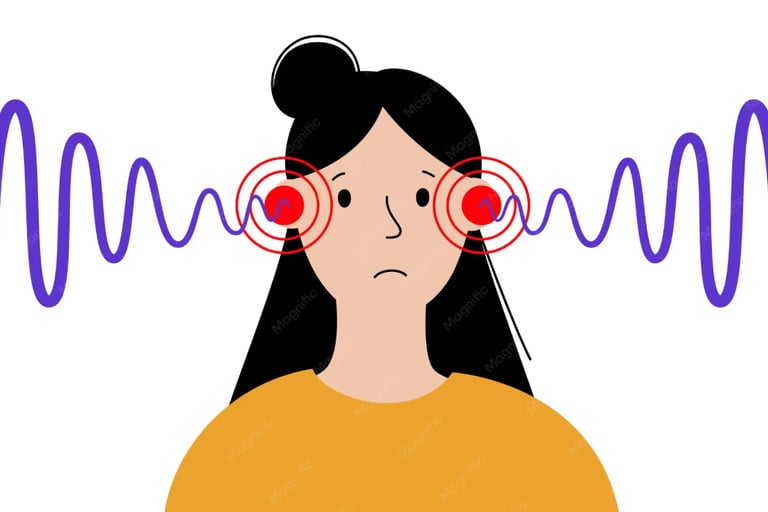
At night, tinnitus often feels sharper because your brain has nothing else to focus on. During the day, your nervous system stays busy filtering hundreds of sounds at once. But in silence, the ringing moves to the front. Your attention locks onto it automatically.
And once that happens, sleep becomes work.
Your body starts anticipating the noise before your head even hits the pillow. The frustration builds first. Then the tension. Then the fear that you’re about to spend another night staring at the ceiling while everyone else sleeps normally.
That stress response matters more than most people realize.
When your brain treats tinnitus like a threat, your nervous system stays alert instead of winding down. Heart rate rises slightly. Muscles tighten. Cortisol stays active longer. The ringing itself may not actually grow louder, but your brain amplifies it because it believes the sound deserves attention.
That is why exhaustion and tinnitus feed each other.
Poor sleep increases sensitivity to sound. Increased sensitivity makes the ringing feel harsher the next night. After enough cycles, even bedtime can trigger anxiety before the ringing fully starts.
You can see this clearly in certain people. Someone who sleeps with the television on every night. Someone who checks the clock every hour. Someone who dreads silence so much they keep earbuds nearby just to avoid hearing their own head.
That pattern usually develops slowly.
Hearing changes can also play a role. Tiny reductions in hearing input leave gaps the brain tries to compensate for. In simple terms, your auditory system turns up its internal volume searching for missing signals. For some people, that becomes ringing, buzzing, humming, or pulsing sounds that feel impossible to escape once the room quiets down.
What makes this frustrating is how often the advice stays surface level. “Relax.” “Use white noise.” “Ignore it.”
Those things can help temporarily. A fan or soft sound machine may give your brain something else to focus on. Cutting caffeine late in the day may lower nighttime intensity for some people. Even jaw clenching and neck tension can worsen tinnitus after dark because the muscles around the ear and head stay activated.
But many people notice the ringing keeps returning anyway.
Because the problem is not always the sound itself.
In many cases, the real issue is that the brain and nervous system stop filtering the sound correctly.
That shift changes how you look at tinnitus completely.
Instead of asking, “How do I block this noise?” you start asking, “Why is my brain reacting to this signal so strongly at night?”
That question leads people somewhere very different.
It explains why some nights feel unbearable after stress-heavy days. Why exhaustion makes the ringing feel closer. Why silence itself starts feeling emotionally charged. And why treating tinnitus like an ear-only problem often leaves people stuck for years.
None of this means you should ignore worsening symptoms. Persistent tinnitus deserves proper attention, especially if hearing changes, dizziness, or pressure come with it. In some cases, untreated hearing loss can gradually worsen without people realizing it at first.
I know how skeptical you probably feel right now. Most people with tinnitus have already tried enough advice to last a lifetime.
After struggling through this myself, I put together a short free video that explains the deeper connection between tinnitus, the nervous system, and why nighttime ringing can spiral so quickly. I made it for the person lying awake at 2 a.m. wondering why nothing they try seems to last.
The longer tinnitus keeps disrupting sleep night after night, the harder it can become for the brain to break that stress loop naturally. Understanding what is actually happening early matters more than most people think.
Healova
Simple health and wellness content designed to be easy, calming, and beginner-friendly.
Quick links
© 2025. All rights reserved.